Foundation Crack Repair in Philadelphia, PA
Many basements in Philadelphia, Pennsylvania rest on walls a century old or more, so cracks and loose joints are common, and most of them only let in water. This free referral service passes one request to an independent local contractor, who visits, measures what's there and writes up repair options with a price.
Not sure if we cover your area? Check now ↓
Basement Estimate Request
Takes about 30 seconds. One local contractor gets it and contacts you.
Your details go to one independent contractor who works around Philadelphia, PA, and that contractor gets in touch with you directly. See our Referral Marketing Disclosure.
Poured Walls Versus Block Walls
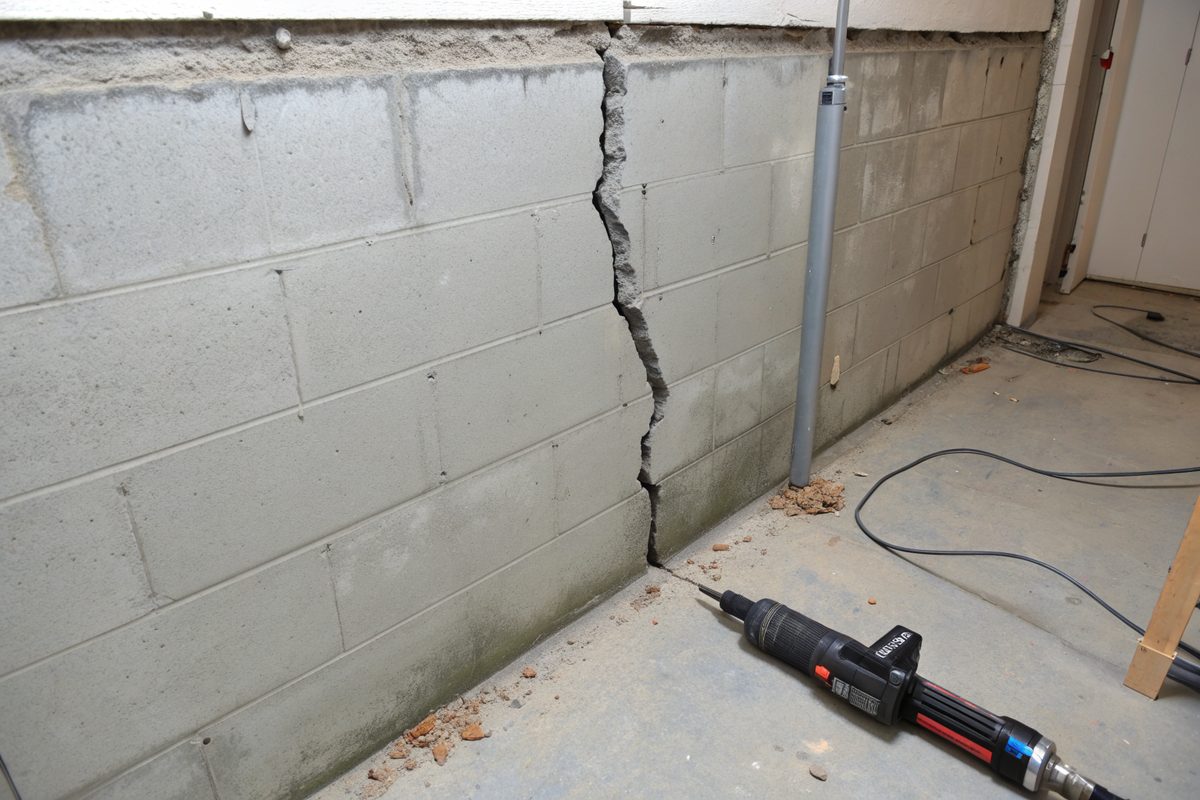
Poured concrete often cracks in thin vertical or diagonal lines as it shrinks. The usual repair is injection: ports go along the crack, and epoxy or polyurethane is forced in until the gap is full. Epoxy hardens and ties the two sides back together; polyurethane expands, stays slightly flexible and is often the choice when the only goal is to stop seepage.
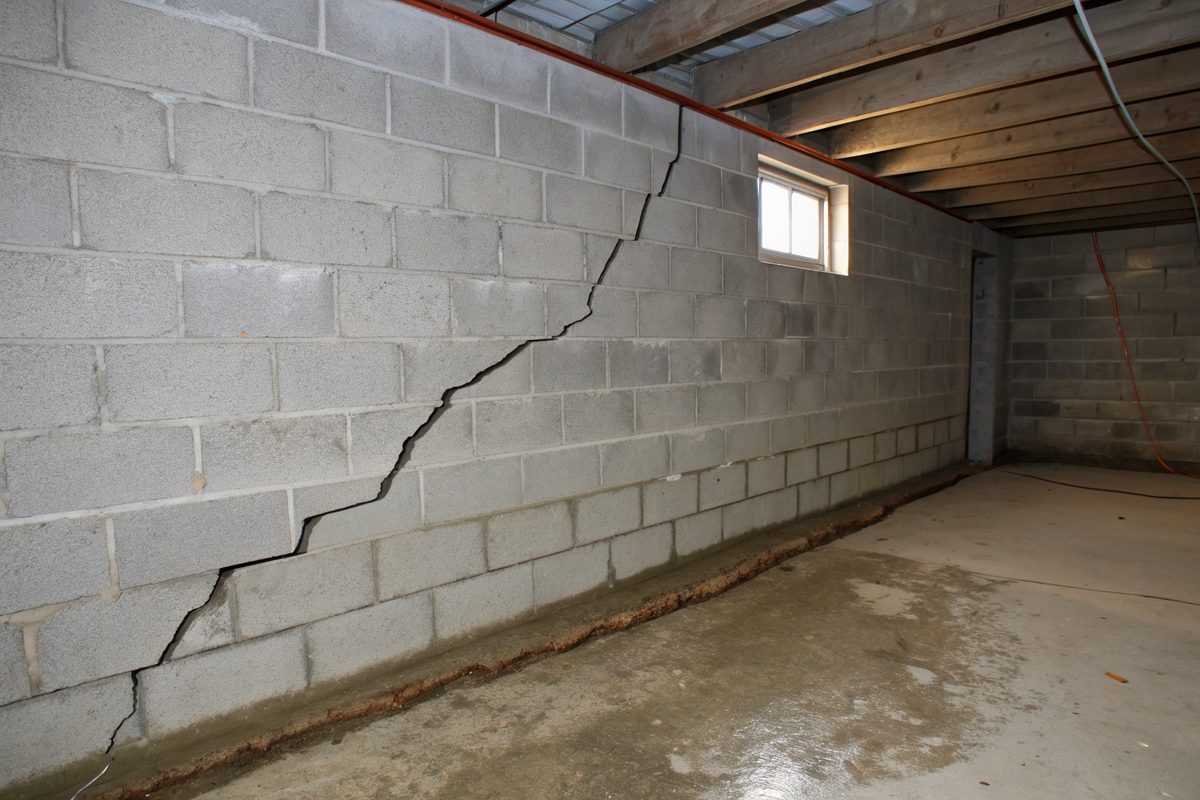
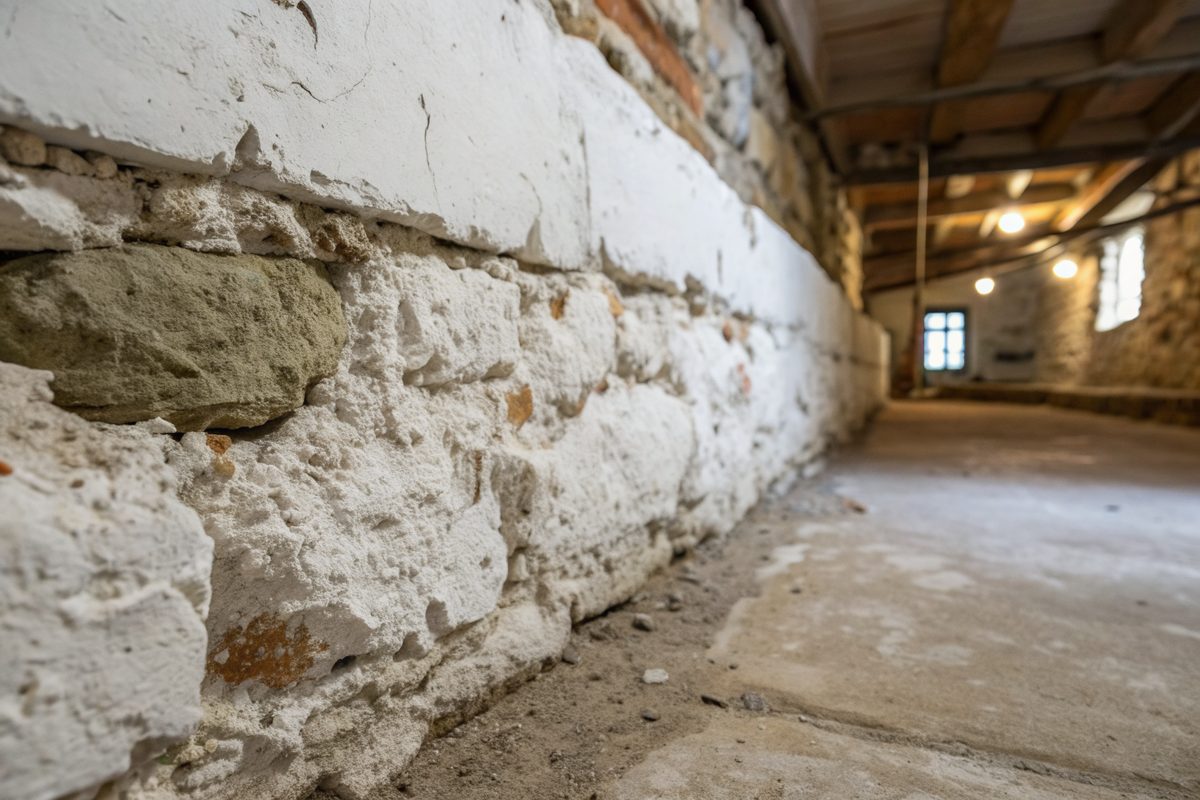
Block, brick and stone fail along the mortar instead, so their cracks follow the joints in a stepped pattern or show up as sandy, crumbling gaps. Injection does little in hollow block or loose masonry, and the common answer is repointing: raking out weak mortar and packing in fresh. That matters in this city, where about 40% of homes date from before 1940 (DVRPC, from Census data) and many early-1900s rowhouses sit on rubble-stone party walls.
Those stone foundations deserve a yearly look. In 2014 L&I urged owners of early-1900s homes to check their basements every year for water, noting that the mortar in such walls breaks down over decades (Inquirer). A crack that only turns damp after rain is mainly a water issue. One that runs sideways, keeps widening or comes with a bulging wall is worth having looked at soon.
Typical Reasons to Request Foundation Crack Repair
- Hairline cracks in poured walls. Injected from inside, usually in a single visit and without any digging.
- Stepped cracks in block or brick. Repointing the opened joints, sometimes with drainage work alongside.
- Sandy mortar in stone walls. Fresh mortar where the old joints have worn away.
- A crack that only weeps. Sealing it and fixing the gutters or grade that feed it.
- A long horizontal crack. In any wall type, it deserves a contractor's attention soon.
- Bulging or leaning masonry. Point out any bow before anyone settles on a simple seal.
- A crack that is getting longer. Mark both ends and the date in pencil; growth past those marks over a few months is worth noting in your request.
Cost Ranges in Philadelphia
| Cost row | Figure | Source (year) |
|---|---|---|
| Typical basement waterproofing project | about $3,000 to $10,000 (average about $5,000) | Fixr national (2026) |
| Interior perimeter drain, per linear foot | $40 to $120 | Fixr national (2026) |
| Sump pump installation | $600 to $2,500 | Fixr national (2026) |
| Epoxy crack injection, per crack | $250 to $1,000 | Fixr national (2026) |
| Waterproof paint or sealant, per sq ft | $1 to $8 | Fixr national (2026) |
For most cracks, the injection row is the one that matters; Fixr's figure is national, per crack, and not this site's price. Repointing stone or brick has no sourced number, and bracing or rebuilding a wall falls outside the table, so ask for each on its own line. The cost guide explains the bigger factors behind a local price.
The Typical Job, in Order
- Record it. Photograph each crack beside a tape measure, with the date.
- Wall type and water. Expect questions about the wall, when water appears and where downspouts empty.
- The method in writing. The estimate should list each crack, the repair planned for it, the material and the warranty terms.
- Permits. Structural work, such as bracing or rebuilding a wall, and any dig-out need L&I permits; ask the contractor what applies at your address.
- A second look. Check the repair after heavy rain and again after winter.
A Simpler Way to Compare
You describe the crack once; the measuring and pricing are the contractor's job. This site is a free referral service, not a contractor, with no Pennsylvania home improvement contractor registration or City of Philadelphia contractor license. It never comes to the house, prices a job or signs anything. Contractors may advertise here, on a free trial for now; homeowners never pay the site or receive anything from it. Match the PA registration number on the contractor's estimate against the Attorney General's online search or 1-888-520-6680, confirm its L&I license or filing through 311, and ask for proof of liability insurance and workers' comp.
Questions Homeowners Ask
Is every foundation crack a concern?
No. Fine vertical lines in a poured wall usually trace back to shrinkage while the concrete set, and many of them only ever admit a little water. A crack running sideways, one that keeps getting wider or a wall that bows inward is the kind worth getting looked at soon.
Can a rubble-stone foundation be injected?
Usually not well. Stone walls have irregular joints and hidden voids that swallow injected material without closing the gap. Repointing, often paired with drainage that eases water pressure, is the more common approach, and a yearly check for water and loose stone is a sensible habit.
Which is better, epoxy or polyurethane?
They suit different goals. Epoxy cures hard and bonds the faces of the crack, while polyurethane swells and stays flexible, which fits a crack that just needs to stop leaking. Ask the contractor which one is planned and why, and have the material named in the written estimate.
Does crack repair in Philadelphia need a permit?
It depends on the scope. L&I says to assume work needs a permit unless it is exempt, and bracing or rebuilding a wall is structural. A dig-out that deepens the basement is excavation, needing a separate permit and advance word to the adjoining owner. The contractor confirms permits with L&I before work begins, since a small job is not automatically exempt.
You May Also Need
If the crack is one piece of a bigger water problem, see basement leak repair, basement drainage and full basement waterproofing, or try the wet basement checker to narrow down the cause.
Talk to a Contractor About Cracks
Describe the crack in a few lines: its length, which wall it is on and whether water comes through. One independent local contractor will follow up to arrange a visit and a written estimate, and hiring stays your decision. The form below takes a minute.